
Author
Kirsty Maclean
Global Head of R&D
Author
Kirsty Maclean
Global Head of R&D
One of the most significant challenges facing biopharmaceutical and biotechnology companies is accelerating the translation of complex science into meaningful clinical outcomes. Achieving that goal depends heavily on precision, particularly in biomarker assessment, assay development, and sample integrity. These elements are essential for accurately evaluating efficacy, safety, and mechanism of action across a wide range of drug classes.
At the same time, clinical programs often encounter practical hurdles that disrupt this process. Inconsistent biomarker measurement can undermine confidence in the data, while delays in assay development and sample logistics frequently slow timelines. As a result, even well-designed programs can struggle to maintain momentum at critical stages of development.
At Cerba Research, we work alongside sponsors to address these challenges by combining our expertise in specialty lab testing, custom assay development, global biobanking, and a collaborative scientific support network into an integrated framework that helps accelerate decision-making and ensure reproducible data at scale.
There are defined molecular or cellular mechanisms for each drug candidate. Custom assays are designed to measure specific biomarkers reliably to understand drug effects and immune responses.
Standard off-the-shelf assays often cannot capture the specificity or may lack the sensitivity required for novel, specialized, or complex drugs, particularly for advanced cell and gene therapies or personalized oncology treatments.
Fully validated custom assays demonstrate robust assay performance aligned to regulatory expectations, de-risking submissions, and accelerating approval pathways. This gives sponsors greater confidence in presenting data to regulatory agencies.
Tailored assays allow real-time adaptation of study protocols and biomarker stratification, advancing precision medicine by targeting therapies to appropriate patient populations. This adaptability helps ensure patients receive the most effective treatment.
Recognizing these protocol-level demands, a robust assay strategy becomes a central consideration rather than a technical afterthought.
To address this, our approach to custom assay development focuses on designing assays aligned to specific clinical protocols and therapeutic objectives.
Through our Centers of Excellence (CoEs), leading scientists collaborate with advanced technology platforms to develop rigorously validated assays that meet regulatory expectations. This integrated model supports reliable, reproducible results across diverse drug classes while maintaining the scientific rigor today’s complex programs demand.
Ongoing research efforts highlight the importance of validated custom assays in ensuring reproducible biomarker measurements, particularly in oncology and immunotherapy research.1
At Cerba Research, all our validated assays are standardized across our global network to deliver consistent, high-quality data for multinational trials, supported by harmonized SOPs and seamless technology transfer.
Nowhere are these assay demands more evident than in precision oncology. Precision oncology illustrates the growing need for harmonized assay development and advanced biomarker analysis.
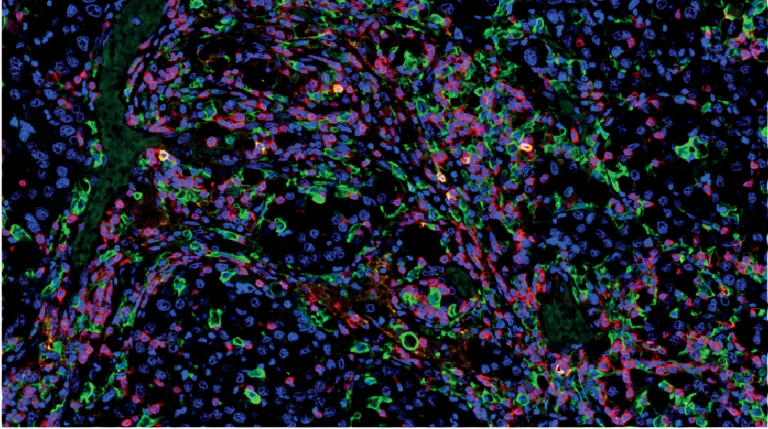
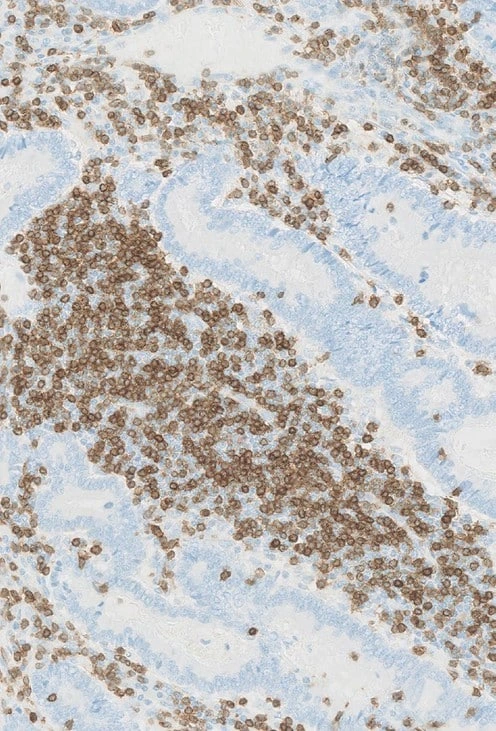
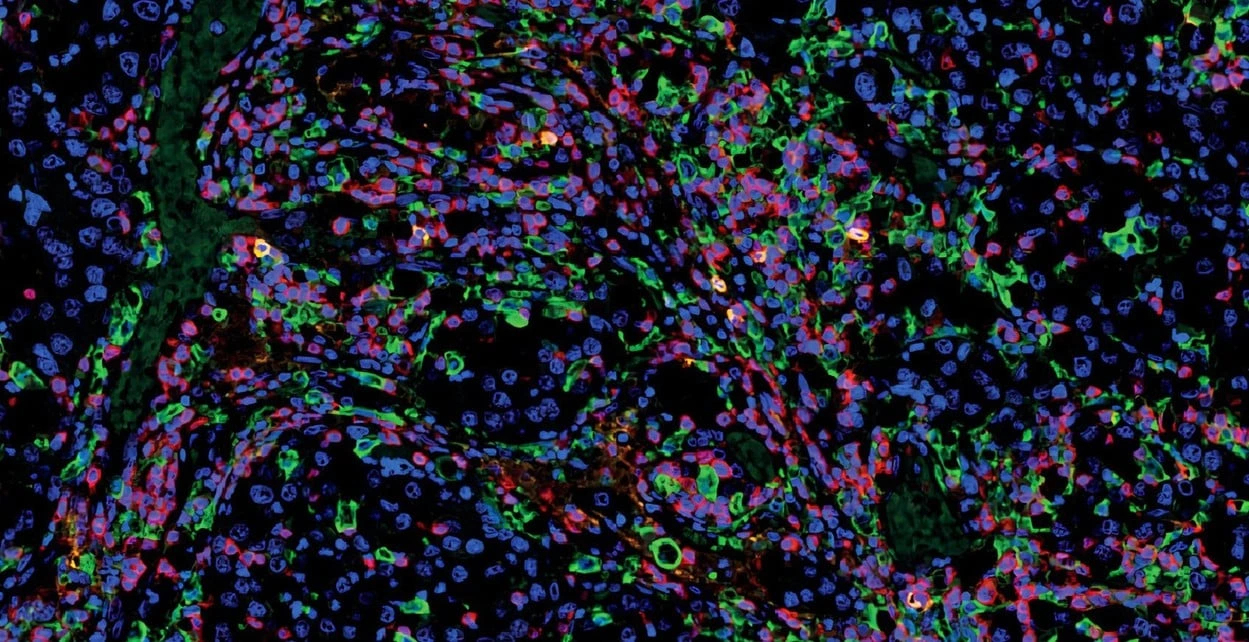
Our CoEs support oncology trials with hands-on assay development and validation, bringing together experienced scientists and technologies like NGS, flow cytometry, immunoassays, and histopathology (including spatial omics).
Today, we maintain more than 250 validated IHC biomarkers and 160 biomarker targets. This breadth of coverage supports comprehensive tumor profiling, immune phenotyping (including CAR-T cell characterization), and genomic analysis to define drug efficacy and safety. These harmonized and validated assays also ensure regulatory compliance, reproducibility, and scalability across global trial sites.
These capabilities align with evidence that multi-omics assay harmonization improves precision oncology outcomes.2 By aligning assay development with clinical objectives, we help sponsors generate deeper insights into tumor biology and treatment response.
Precision in assay development is only a small part of a bigger picture of clinical trial complexity. At the end of the day, even the most robust assay can’t compensate for a compromised sample.
Sample integrity is one of those factors everyone agrees is important, yet it’s often where variability creeps in. Variability in sample collection, processing, or storage can compromise biomarker data and introduce uncertainty.
Cerba Research addresses this through our histopathology CoE based in Montpellier and through Cerba Xpert, which provides access to a large biobank repository with over 40,000 well-characterized prospective and retrospective samples, including diverse biofluids and tissues.
The Frépillon biobank facility alone houses over 2.4 million samples, managed under regulatory-aligned SOPs with advanced tracking and temperature monitoring systems. Customized collection kits, rigorous processing protocols, and storage ensure sample integrity and provenance, supporting data reproducibility and longitudinal studies.
Indeed, there’s solid evidence that strong biobanking practices reduce failure rates in biomarker development.3 By linking biobanking and custom assay development from the outset, we help sponsors design more efficient protocols, move biomarker discovery forward faster, and avoid setbacks that can slow a trial.4
As programs expand across borders, operational complexity increases alongside scientific complexity. Executing multinational clinical trials means striking the right balance between global scale and local expertise. Sponsors need broad geographic coverage, but they also need teams who understand regional regulatory requirements and operational realities.
Cerba Research operates through 14 core laboratories and 31 partner labs across North America, Europe, Asia-Pacific, Africa, and Australia, enabling sponsors to scale programs while aligning with local regulatory requirements.
Our CoEs in histopathology, genomics, flow cytometry, infectious disease, and bioanalytics bring deep technical expertise, strengthened by on-the-ground insight in each region. Our global project management office coordinates execution, communication, proactive risk management, and consistent client engagement throughout the clinical lifecycle.
From a technology standpoint, our integrated laboratory network supports comprehensive tumor and immune landscape analysis from early discovery through to regulatory submission. Platforms such as BD FACSLyric™ and Cytek Aurora™ for immune profiling; Illumina, Element, and Oxford Nanopore for sequencing; and an integrated digital pathology image management and analysis solution (including the use of HALO® and Visiopharm® software) allow us to generate detailed, high-quality data across modalities.
Our global network and harmonized SOPs deliver consistent, transferable assay results across solid and hematologic cancers, including NSCLC, metastatic breast cancer, and multiple myeloma. Since 2018, we have supported more than 210 oncology trials, helping partners generate high-quality data.
Effective protocol design requires integration across assays, samples, and global execution.
We are committed to advancing precision oncology through custom assay development, global biobanking, and harmonized workflows. Our CoEs develop and validate custom assays for both solid and hematologic tumors, ensuring regulatory-compliant biomarker detection.
Using mIHC, flow cytometry, NGS, and digital pathology tools, we provide comprehensive insights into both tumor biology and immune responses. Supported by Cerba Xpert’s extensive biobank, this integrated approach enhances data quality, accelerates timelines, and strengthens decision-making for our partners.
Ready to accelerate your clinical program with harmonized custom assays and high quality samples?
If you’re advancing a precision oncology program, our integrated assay development and biobanking capabilities can help you generate deeper insights – faster.
Read more about our capabilities or reach out to our oncology experts to discuss how we can support your next study.
Learn how multiparameter flow cytometry supports AML clinical trials, from patient selection and receptor occupancy to measurable residual disease (MRD) monitoring.
Learn more about key oncology trends from AACR 2026 including AI-driven pathology, liquid biopsy advances, antibody therapeutics, and immune profiling in cancer research.

Explore advances in spectral flow cytometry, AI-assisted data analysis, immune profiling, and validated flow cytometry assays for clinical research.

We’re exploring one of the most important topics in flow cytometry: building quality into your flow cytometry data. At first glance, this may seem like a straightforward topic. However, there are many sources of variability that can find their way into your data and ultimately affect the consistency of your results.