
Author
Kim Whitley
Scientific Content Manager
Author
Kim Whitley
Scientific Content Manager
Vaccine developers are exploring new tools, platforms and ways to measure immune responses, but their value depends on how well they serve the study’s objectives. Defining what the research needs to establish – and which decisions the resulting data must support – helps shape the questions to investigate, study design, and testing approach.
This was reflected in discussions across the congress, from AI in protein design and multi-pathogen vaccines to cellular immunity. A workshop led by Marta Murreddu, Director, Business Development at Cerba Research, on polio eradication brought a complementary public health perspective, highlighting the role of specialist virology capabilities in monitoring progress toward eradication and addressing the challenges that remain.
Read on for key takeaways on AI in vaccine R&D, pandemic preparedness, multi-pathogen vaccines, cellular immunity, and polio eradication.
The COVID-19 pandemic underlined the importance of responding quickly to infectious disease threats. Continuing a theme from previous congresses, discussions on pandemic preparedness and emerging and re-emerging diseases also highlighted the groundwork needed before an outbreak: established scientific expertise, suitable laboratory capabilities, and a clear understanding of the data required.
Case identification, regional insecurity, population mobility, and cross-border trade are key epidemiological and demographic challenges affecting the clinical development of vaccines for pandemic preparedness, including Bundibugyo virus (BDBV). The rapid availability of effective vaccines is crucial to an effective response, and the mRNA platform has been identified as the best option for pandemic preparedness because of its potential for rapid manufacture and adaptation to new strains.
Discussions also covered the development of next-generation influenza vaccines designed to provide broad-spectrum protection and prevent cross-species transmission. There is growing interest in efficient mucosal vaccines that address the limitations of existing approaches. Injectable vaccines, for example, do not induce mucosal protection, offer limited breadth of protection, and do not prevent transmission.
Nasal vaccines have the potential to address these limitations by activating strong mucosal immunity. Through targeted antigen design, they can provide broad protection across multiple entry sites, including the nasal, pulmonary, and oral mucosa. Mucosal immunity helps prevent pathogen development and spread by blocking transmission.
For sponsors, preparedness is not just about having a platform ready to deploy. It also means knowing which questions a study needs to answer and having the capabilities in place to investigate them. Building those considerations into planning early can help teams avoid having to establish essential testing approaches only once an urgent need arises.
Most proteins suffer from conformational instability, leading to low yield, storage problems, or low efficacy.
Vaccine developers and researchers presented how their AI-powered platforms and models can design and select antigens and proteins with improved stability, supporting the development of novel vaccines with improved stability, immunogenicity, and safety. For example, ForgeBio presented advances in antigen (Ag) design for RSV F-protein, hMPV F-protein, influenza HA/NA, and parainfluenza type 1 (HPIV-1) and type 3 (HPIV-3).
Before adopting an AI-assisted approach, teams need to define what they want it to help establish and how its outputs will be evaluated. Starting with the question – not the tool – helps keep innovation connected to evidence that can inform development.
Combination vaccines can offer significant health and economic benefits compared to standalone vaccines. They could simplify immunization schedules, increase coverage, allow introduction of new vaccines, and enhance efficiency of immunization programs.
Researchers are using modeling approaches to identify and prioritize suitable vaccines for combination while also evaluating their technical feasibility, public health impact, vaccine delivery considerations, potential sustainability, market opportunities, and economic benefits.
The approach could simplify immunization, but combining targets introduces additional development questions. For example, discussions touched on the practical implications of combining viral targets such as RSV and human metapneumovirus (HMPV), including the potential need to reformulate the vaccine and the associated costs.
These considerations reinforce the importance of defining the intended product and the evidence needed to assess it early in development. With combination vaccines, a one-size-fits-all testing approach is unlikely to be enough, as each target may present different considerations.
Antibody measurements remain important in vaccine research, but they don’t capture every aspect of the immune response. Discussions highlighted cell-mediated immunity and its role in understanding vaccine-induced protection and longer-term immune responses.
For studies aiming to understand cellular immune responses, antibody measurements alone may not answer the research question. Defining the response of interest early helps teams determine whether complementary methods, such as cell-based assays, are needed alongside antibody testing. The goal is to select measurements that address the study objectives and generate interpretable evidence.
The development of novel controlled human infection models (CHIMs) was also discussed as an approach to support vaccine and therapeutic development. Safe human challenge models have been established for RSV-B and C. difficile, providing another area of research relevant to understanding infectious disease and evaluating potential interventions.
Marta Murreddu, Director, Business Development at Cerba Research, brought a public health perspective to the discussion in her workshop on polio eradication. Her presentation explored the progress made toward eradication, the challenges that remain, and the specialized virology capabilities that play a vital role in supporting these efforts.
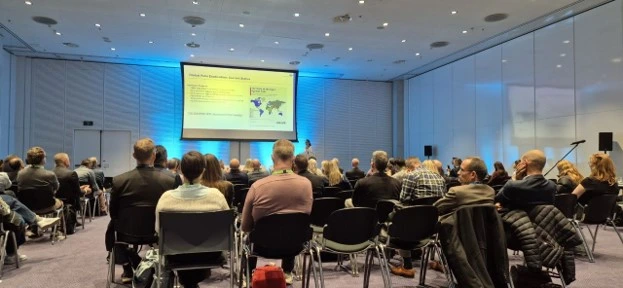
Despite major progress over recent decades, polio eradication remains an ongoing global effort. Understanding the progress achieved and the challenges that remain requires robust scientific evidence and the capabilities to generate it. Maintaining specialized virology capabilities is therefore essential not only to support polio eradication efforts, but also to advance broader public health initiatives.
Learn more from Marta’s presentation
Across these topics, a consistent lesson emerged: the value of a tool or analytical approach depends on the question it is being used to answer. Whether the focus is AI, a combination vaccine, or cellular immunity, teams need to understand what evidence they require before deciding how to generate it.
That is why scientific and laboratory input matters early in study planning. Every vaccine program brings different scientific, regulatory, and operational challenges, making it important to define the evidence needed to support the decisions ahead. An early, consultative discussion can help shape a testing strategy around a study’s specific requirements, anticipate potential evidence gaps, and ensure the right assays are in place to generate the data that matters most.
Explore our capabilities in infectious disease research or speak to our experts about your clinical trial requirements.
Learn more about our specialized support for infectious disease programs and vaccine and antiviral development, from discovery through clinical development.
Following the trials and tribulations of COVID-19 vaccine development, the infectious disease landscape is advancing rapidly. Now more than ever, the life sciences industry is experiencing major scientific and technological innovation that has the potential to dramatically enhance infectious disease R&D in the future.

Read more about the scientific expertise, agility, and scale for optimized solutions.
Learn more about our poster for whole-genome sequencing of Human Respiratory Syncytial Virus.
Despite extensive international efforts, infectious diseases continue to pose a large threat to global human health.