
Author
Kim Whitley
Scientific Content Manager
Author
Kim Whitley
Scientific Content Manager
High-parameter spectral platforms are unlocking deeper biological insights, but they also increase the demands around panel design, standardization, validation, and data analysis. For sponsors advancing complex clinical programs, success will increasingly depend on partners who can translate these technological advances into robust, reproducible workflows.
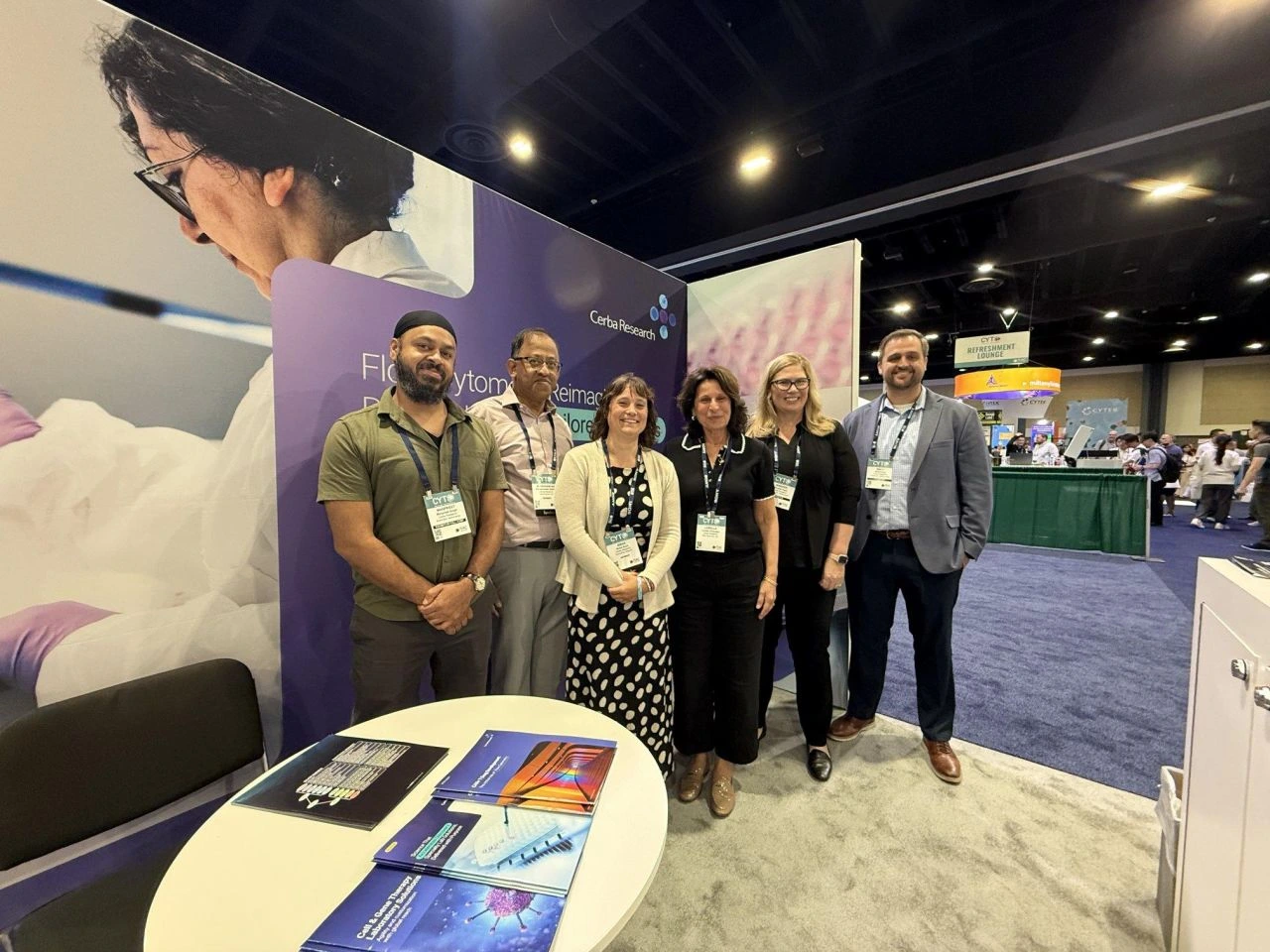
At CYTO 2026, we came to contribute as much as to learn, presenting three scientific posters and a CAR-T tutorial workshop while engaging directly with the community shaping how these technologies reach clinical practice. Here are our key takeaways.
Spectral flow cytometry remained one of the dominant themes throughout CYTO 2026, with vendors introducing platforms capable of resolving an increasing number of fluorescent markers simultaneously. Presentations demonstrating greater than 40-color panel designs highlighted the remarkable potential of these technologies to deliver deeper immune profiling.
But expanding panel complexity requires more than advanced instrumentation. Achieving reproducible, clinically meaningful data is built on sophisticated panel design, optimized spectral unmixing strategies, appropriate controls, and rigorous validation approaches.
As high-parameter cytometry becomes standard in advanced research applications, scientific expertise will become a critical differentiator between generating more data and generating meaningful insights.
As cytometry panels become more complex, traditional analysis approaches struggle to keep pace. CYTO 2026 highlighted a growing industry focus on machine learning-driven tools that automate complex processes, including spectral unmixing, clustering, and population identification.
These technologies are a significant step towards making high-dimensional cytometry data more scalable and actionable across research and clinical applications.
This is an area where we continue to invest through our partnership with Ozette Technologies, who also attended this year’s meeting. The strong interest in Ozette’s AI/machine learning-driven analysis platform, including a popular scientific panel discussion on its translational and clinical applications, reflects the growing recognition that smarter analysis approaches will be essential to the future of cytometry.
Working with Ozette enables us to integrate advanced analytical approaches directly into clinical workflows, helping sponsors extract meaningful insights from increasingly complex datasets while maintaining consistency across studies.
CYTO 2026 also highlighted growing interest in immune cell characterization for autoimmune and inflammatory diseases. Applications such as B cell immunophenotyping are becoming increasingly important as therapeutic pipelines expand beyond traditional oncology-focused programs.
This evolution creates new opportunities for advanced flow cytometry approaches to support biomarker discovery, patient characterization, and translational research across a broader range of indications.
Three members of our flow cytometry team presented scientific posters at the congress. The work sparked strong discussion, particularly around practical problem-solving: fresh sample troubleshooting, complex population gating, and the methodological decisions that separate reliable data from ambiguous results.
Presented by Bieke Soen, Associate Director, Flow Cytometry
Standard TBNK assays play a key role in immune cell enumeration, but they introduce real challenges in allogeneic CAR‑T studies. Because these engineered T-cells can lack CD3 and express CD56 (upon activation), they can be misclassified as NK cells, risking inaccurate interpretation of clinical trial data. This work addresses that gap by refining panel design and updating the gating strategy to clearly separate true NK cells from CAR‑T cells.
Explore the panel and gating refinements in detail and understand why getting this right matters for trial data integrity.
Presented by Nithianandan Selliah, Global Director, Flow Cytometry
Comprehensive immune profiling increasingly depends on high‑parameter assays, but scaling complexity introduces new challenges. This 29‑color spectral flow cytometry panel captures a broad range of immune populations and functional markers in a single assay, generating more than 2000 reportable parameters for clinical research. The work shows how to balance depth with reliability, particularly when working with rare cell populations and low-expression markers.
Find out how the panel was designed and validated to deliver reliable data across more than 2,000 parameters, including approaches for rare populations and low-expression markers.
Presented by Manpreet Singh, Associate Scientist, Flow Cytometry
Unexpected signals in flow cytometry don’t always come from spectral overlap. During panel development, this team identified a signal that standard compensation couldn’t explain and traced it back to Förster Resonance Energy Transfer (FRET) between fluorochromes within the TCR/CD3 complex. This finding highlights a critical but often overlooked source of artifacts when targeting closely associated proteins.
Learn how the team identified this artefact, what it means for your panel design, and the decisions that prevent it.
As part of the scientific program, Nithianandan Selliah and Bieke Soen co-delivered a workshop exploring how flow cytometry can generate deeper insights into CAR-T cell therapies across both autologous and allogeneic settings.
Focused on one of the central challenges in cell therapy development – how to effectively monitor a “living drug” – they highlighted:
A key takeaway from the session is that generating clinically meaningful insights requires more than detecting CAR-T cells; it requires a holistic understanding of their behavior over time. This reinforces the need for standardized, validated workflows that can be applied consistently across clinical trials.
CYTO 2026 made it clear: the field is advancing faster than many workflows are equipped to handle. High-parameter assays are becoming standard, but their value depends on the analytical rigor and standardization behind them. AI-powered tools are maturing, but integration into validated clinical workflows remains the real challenge.
For sponsors, the risk is not falling behind on technology but investing in platforms that cannot be translated into consistent, trial-ready data. Navigating that gap requires partners with deep assay expertise, scalable global infrastructure, and the analytical capabilities to turn complexity into clarity.
Learn more about our evolving flow cytometry capabilities, or get in touch to find out how our team can support your clinical program.
Explore immuno-oncology biomarker strategies using flow cytometry, IHC, and NGS to improve tumor profiling, immune insights, and clinical trial outcomes.
Learn how advanced flow cytometry assays support key activities such as CAR-T cell tracking, biomarker identification, treatment response assessment, and minimal residual disease (MRD) evaluation, helping to generate high-quality data and drive informed decision-making in complex cell therapy trials.
Learn more about tracking CAR-T therapy success with flow cytometry across manufacturing, quality control, and patient outcome monitoring.