Expert-led scientific partnership

- Early engagement to define assay strategy
- Fit-for-purpose assay design and validation
- Ongoing scientific and regulatory support

Drive confident clinical decisions with sensitive, reliable immunoassay testing and expert-led global delivery.
For global programs, consistency has to be designed in from the start. That means building an immunoassay strategy around your molecule, study objectives, and the practical realities of running trials across regions and phases.
We support an integrated approach through a focused set of immunoassay services, all delivered under the same quality and scientific standards.
Our capabilities include:
With expert scientific oversight, validated methods, and harmonized delivery across our global lab network, you get consistent, analysis-ready data, so you can see the full picture across your study.





Develop and execute robust ligand-binding assays to quantify proteins, cytokines, and other biomarkers with high sensitivity and specificity.

Generate precise PK/PD data to assess drug exposure and biological response throughout your study.

Evaluate ADAs and NAbs to assess immune response and potential impact on safety and efficacy.

Design, optimize, and validate assays tailored to your specific program, ensuring alignment with study endpoints and regulatory expectations.

Deliver structured, analysis-ready datasets that integrate immunoassay outputs with broader clinical and biomarker data.
Review Cerba Research’s off-the-shelf 37-plex MSD panel, enabling comprehensive, high-sensitivity cytokine and biomarker profiling in a single assay to support disease characterization and safety assessment in complex clinical studies.

Explore expert perspectives on managing immunogenicity risk, including strategies for assay selection, data interpretation, and minimizing impact on safety and efficacy in biologic drug development.

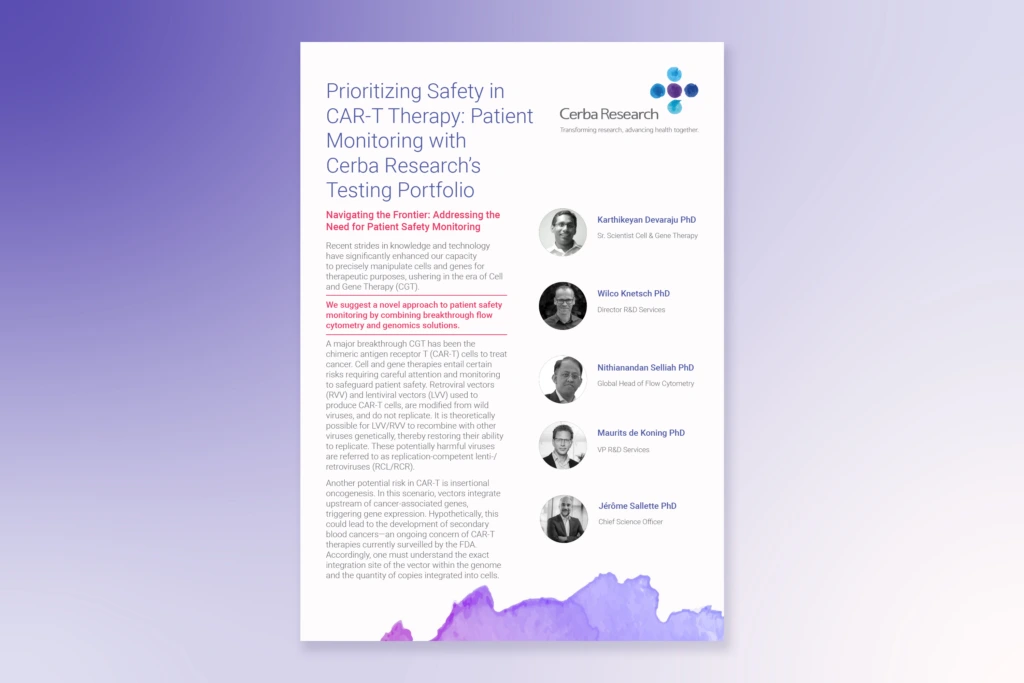
Gain insight into FDA expectations for CAR‑T therapies, including analytical strategies, assay validation, and key considerations for supporting regulatory submissions in cell and gene therapy programs.